

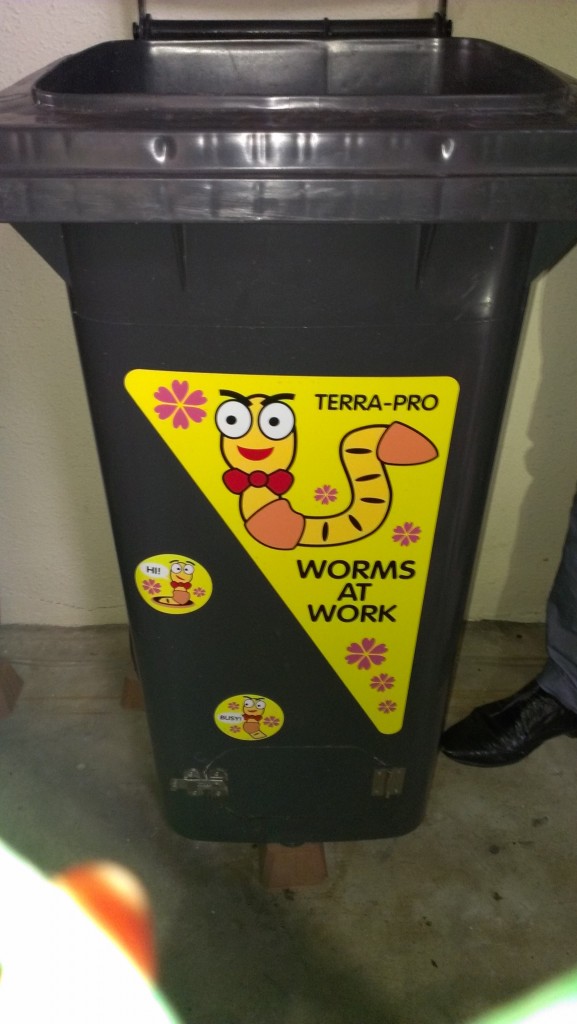

Worms are not usually known as man’s best friend but that could soon change if the idea of composting takes root in NUS given the success of a composting project at Temasek Hall.
Temasek Hall has a 2-year composting system managed by a Green & Safety Committee. They started off with 2 compost bins before expanding to a 6-bin system, one bin for each day of the week excluding Sunday.
Each day, uncooked food from the kitchen, such as vegetable pellets and fruit skins, as well as paper waste from the office, is dumped into the respective compost bin for decomposition by worms (a mixture of both “red worms” and “blue worms”) in a process known as “vermicomposting”. The end product is compost, both solid and liquid, that can be used as rich fertilisers. The liquid compost is further diluted with water and pumped with oxygen, which promotes microbial growth, to produce “worm tea” – also used as fertiliser. The “worm tea” and solid compost are harvested every 2 days and used to grow various types of flora around Temasek Hall.
Temasek Hall has a 2-year composting system managed by a Green & Safety Committee. They started off with 2 compost bins before expanding to a 6-bin system, one bin for each day of the week excluding Sunday.

This has led to the creation of a small community garden managed by the residents of Temasek Hall where plants such as the lime plant being grown. They plan to grow chilli padi next.
The advantages of the system do not end there. The bins are odourless and do not attract flies. Furthermore, the whole system costs less than an initial investment of $2000 and it is self-perpetuating because the worms also reproduce. According to Low Cheng Hong, Hall Manager at Temasek Hall, “The worms do all the work and we don’t have to pay them… It is an almost zero cost operation.”

Unfortunately, it is not all a bed of roses for the project. The worms thrive only in a proper environment and there have been some kinks along the way. For example, about a year ago, exhaust from vehicles that parked near the compost bins led to changes in the compost bin ecosystem which made it untenable for the worms. Furthermore, “vermicomposting” is primarily for unprocessed food and not cooked food. Low says that composting for cooked food is possible but the process is totally different and would likely involve Black Soldier Flies.
The RIDGE understands that some faculty members at Cinnamon College are currently exploring the possibility of various composting methods. Primarily, the concern is that the UTown dining hall produces a lot of organic waste that is allegedly incinerated. Composting in UTown could help to reduce and recycle that waste.
Cheryl Ng, resident at Cinnamon College said, “I believe introducing composting to the RC dining halls is a great idea, as a pitiful amount of food gets thrown away from day to day and composting can help turn this wastage into more productive uses. Moreover, the compost we generate could be used to fertilise the many green areas around UTown, helping it live up to its reputation as Singapore’s most environmentally-friendly campus.”
This is probably the only context in which a bunch of flies and worms feasting on our food could seem such an appetising idea.